How I Use Ai For My Photography Business (It's Not What You Think)
Jun 15, 2026
Whenever I tell another photographer that I use AI in my work, I can usually watch the assumption land on their face before they say a word. They think I mean one of two things. Either I am generating fake images out of thin air, or I am running my photos through some tool that retouches them for me while I put my feet up. Neither is true, and I want to be clear about that from the start, because the conversation around AI and photography has gotten so loud and so dumb that it is almost impossible to have an honest one. Here is what I have learned after a long time doing this for a living. The hard part of this job was never the photography. The hard part was always everything wrapped around it.
That is the piece nobody talks about when they romanticize this career. People picture the assignment, the light, the moment you press the shutter and know you got it. They do not picture the four hours of folder management, the backup strategy you keep meaning to fix, the website you have not touched in two years, the emails, the invoices, the YouTube descriptions, the workshop logistics, and the quiet daily question of which task actually deserves your Tuesday morning. I run several things at once. There is my assignment and commercial work. There is Mott Visuals, the production company I built with my wife Q. There is AskMott, my education platform and YouTube channel. There are the workshops, the membership community, and a stack of personal projects I care about more than anything but somehow always push to the bottom of the list. The photography I can do in my sleep. It is the business around the photography that quietly steals the hours I would rather spend behind a camera.
So let me say the thing this whole article is really about, and I will say it again at the end because it is the only sentence here that matters. Claude has not made me a better photographer. What it has done is help me spend more time being a photographer. That distinction is everything, and if you take nothing else from this piece, take that.
The job that was never the photography
I think of Claude as an assistant. Not as software, not as a magic box, not as some glimpse of the future. An assistant. Most photographers I know, even very good ones running real businesses, cannot afford to hire someone to handle research, planning, systems, and the endless administrative weight of a creative career. I could never justify it for my personal work. What I found was something that sits in that gap for a tiny fraction of the cost, and once I started thinking about it that way the whole thing clicked. You do not ask whether your assistant is brilliant. You ask whether your assistant frees you up to do the work only you can do. By that measure it earned its place a long time ago.
The way I actually work with it: the 10/80/10 rule
Before I show you what I have built with it, I need to explain how I use it, because this is where most people go wrong. They either refuse to touch it out of pride, or they paste in a lazy prompt, take whatever comes back, and wonder why it sounds like everyone else on the internet. Both are mistakes. The frame that finally made it work for me is something I picked up and now run across all three of my businesses. I call it the 10/80/10 rule.
The first ten percent is mine. I show up with the thinking. The intent, the rough outline, the brief, the actual point I am trying to make. I decide what I want and why before I ask for a single thing. This part cannot be skipped, because it is the part that requires taste and judgment and knowing my own work. Garbage in, garbage out has never been more true.
The middle eighty percent is the handoff. This is the heavy lifting I used to lose whole afternoons to. The drafting, the structuring, the research, the first pass, the organizing, the grunt work. I give it to Claude and let it carry the load. This is the leverage. This is the time I get back.
The last ten percent is mine again. I take what comes back and I fine tune it. I correct it, I cut what is wrong, I put my voice back in, I catch the mistakes, I add the taste. This part is just as non negotiable as the first.
Here is the whole point of the framework. The two slices at either end are where your value lives. The eighty in the middle is where your time used to die. You are not removing yourself from the work. You are removing yourself from the part of the work that was never worth your time in the first place. Skip the front ten and you get generic noise. Skip the back ten and you ship something that sounds like a robot and is probably wrong somewhere you did not check. Do both, and it stops being a gimmick and starts being a real multiplier.
So when I say I use Claude for something, understand that I never mean it does the work for me. I mean we do it together. That distinction runs through everything below.
I want to walk you through the real ways I use it, because abstract talk about AI is worthless. Real examples are the only thing worth your time.
Example one: structuring an entire shoot, start to finish
Here is something most working photographers will not admit. The shooting is the easy part. The structure around it is where we fall apart. The planning before, the chaos after, the systems we keep promising ourselves we will build and never do. If you are anything like me, and a lot of photographers are whether they say so or not, you are sharp in the field and a disaster at process. That gap is exactly where this tool earns its keep.
Take a personal project, the kind I am always trying to carve out time for. Before I even pack a bag, I will sit down and build the whole framework with Claude. I bring the concept and the intent, that is my ten percent. Then we work through the rough shot list, the packing list, the location logistics, the workflow for after the shoot, the file naming convention so I am not inventing one at two in the morning when I get home, and even the batch metadata approach so the take stays searchable for the rest of its life instead of rotting on a drive. None of that is creative work. All of it is the scaffolding that lets the creative work actually happen and actually survive.
It does not stop at the shoot either. I will have it help me digest a client brief, pull out what the client is really asking for underneath the marketing language, and turn that into a creative plan I can stand behind. I will have it rough out a pitch strategy and a marketing plan for the work once it exists. How I roll it out on social, how I write it up for my newsletter, how I frame it so it actually lands instead of disappearing the day after I post it. I bring the vision and the final judgment. It handles the structure my brain refuses to build on its own. That is the deal, and it is a good one.
Example two: building my personal archive system
The next serious project was researching and building a personal archive and backup system. I need to draw a line here so this makes sense. Mott Visuals already has staff who manage our production archives and company data. That side of the house is handled. This was something separate and entirely mine. A personal ecosystem for my own archive, my workshop images, my YouTube content, my educational materials, and the personal projects that have followed me around for years living on a frankly embarrassing pile of drives.
If you have been shooting for any length of time you know exactly the mess I am describing. A drive here, a drive there, a vague memory that the 2017 work might be on the silver one or possibly the black one. It is the kind of problem you ignore until the day you cannot, and I did not want to wait for that day.
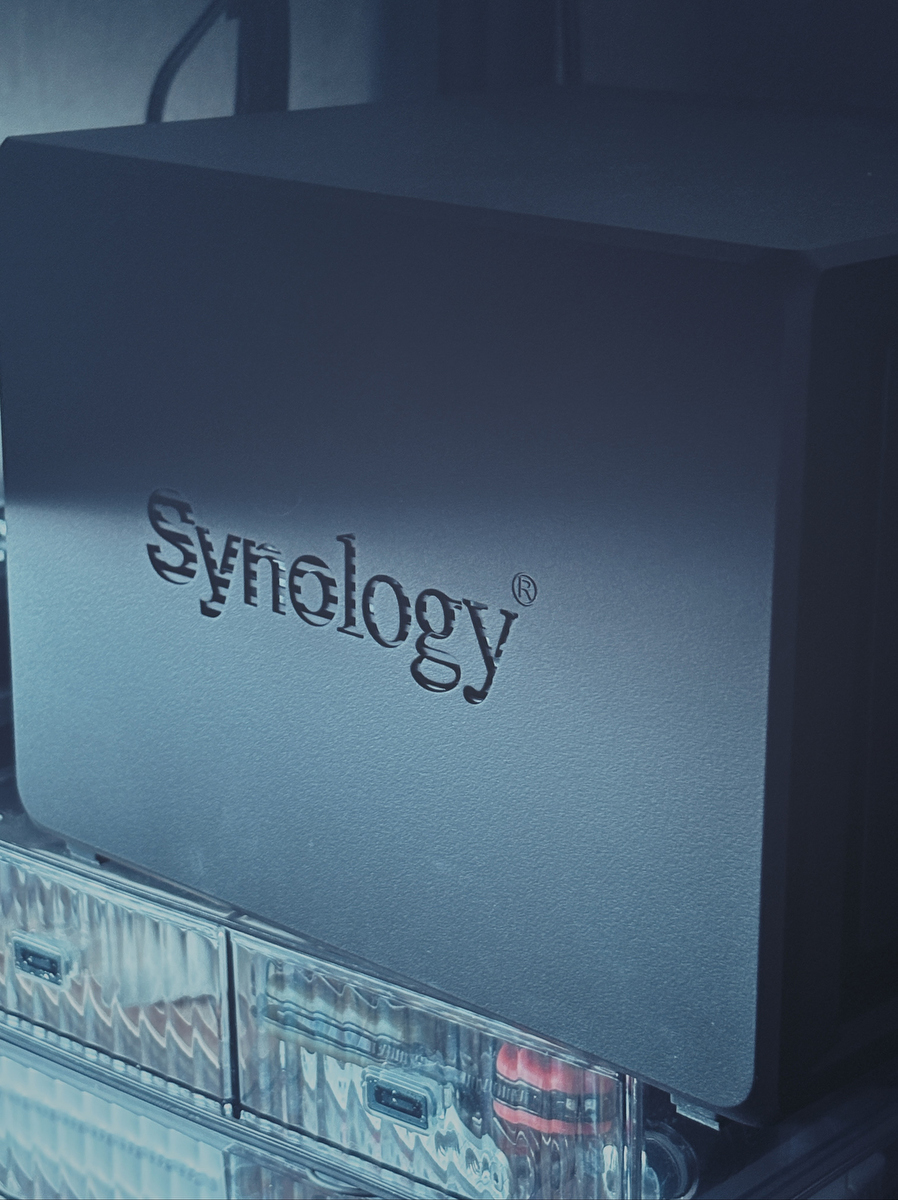
I used Claude to research the whole landscape. Network attached storage, backup strategy, the logic behind RAID, folder structures, ingestion workflow, all of it. We went back and forth for a long time. I asked questions, pushed on the answers, made it explain the tradeoffs in plain language, and slowly built a picture of what I actually needed instead of what a marketing page wanted to sell me. I landed on a Synology NAS set up with redundancy and a dedicated volume for backing up my laptop. The hardware matters, but the hardware was never the real win.
The real win was the structure. Anyone can buy a box and plug in drives. What I had never managed on my own was a folder system and a workflow that matched the way I actually work and that I could keep up with for the next decade without thinking about it. I cull and rename in PhotoMechanic, tone and export in Lightroom, and I shoot both Sony and Leica files that I keep in their native formats. All of that had to fit into something consistent. I am ADHD, and I have learned the hard way that any system I build has to be simple enough that I will follow it on a bad day, not just a good one. Claude helped me think it through, question my own assumptions, and land on something sustainable. And here is the part I did not expect. The home system worked so well that I am almost certainly going to bring the same thinking over into Mott Visuals. When a setup you built for yourself starts looking like the blueprint for your company, you know you got the structure right.
Example three: overhauling AskMott
The third big project was my education platform and community, AskMott. This one came in two phases, and the second is where I want to be honest about the downside, because anyone who only tells you the good parts is selling something.
In the first phase I used Claude purely as a consultant. I had a hundred questions and no one to talk them through with. Which platform to build on. How to structure the courses. How the membership should work and what it should cost. How to organize the community so it actually feels alive instead of like a ghost town. How to market it. What a brand new visitor should see in the first five seconds and what I want them to feel. None of those are photography questions. They are business questions, and they are the ones that decide whether your education work survives or quietly dies. I also had it analyze competitors, the other photographers and platforms doing this well, to see what was actually working for them and why, so I was building from evidence instead of guessing. Same thing for my YouTube channel, looking hard at what was landing for people in my space and what was just noise. Talking all of it through with something that could hold the whole picture at once, push back, and offer angles I had not considered was worth far more than I expected.
In the second phase I gave Claude access to parts of the website itself. That changed what it could do. It helped me spot SEO opportunities I was leaving on the table, find real errors on the site, rethink layout, improve the experience, and identify the places where I was quietly losing people who might otherwise have joined. A working photographer almost never has a second set of trained eyes on this stuff. Having one available on demand was a real shift.
Now the caveat I promised. Hands on website work and full audits burn through your usage limits fast. Faster than you expect. There is nothing worse than finally hitting a rhythm and slamming into a wall. So if you are going to tackle something big, plan for it. You have two sensible options. You can have Claude guide you through it using screenshots, which is slower but lighter and keeps you in control of every change. Or you can bump up to a higher plan for the stretch of time you are knee deep in the project and drop back down when it is done. I learned this the irritating way so you do not have to.
The small stuff that adds up
Beyond the big projects, the daily uses are where it has quietly woven itself into how I work. I brainstorm YouTube topics and develop half formed ideas into something with a spine. I sharpen titles and pressure test concepts before I commit a week of production to them. I lean on it when I am learning a new skill and want a patient explanation instead of a forum argument. I use it to compare gear and products before I spend money, which has saved me from more than one bad purchase. I use it to prioritize my week when everything feels equally urgent, which for me is most weeks, and increasingly to shape my personal schedule too, not just the work. And maybe most usefully, I use it as a sounding board for business decisions when Q is busy and I just need to think out loud with something that will ask me a sharp question back. None of this is glamorous. All of it is the connective tissue that keeps a one person operation from falling apart.
I am also starting to explore giving it access to my calendar so it can help me build a real weekly structure and protect the hours that matter. I am not there yet, and I will report back honestly when I am, but the direction is obvious. The more administrative noise I can hand off, the more of my attention goes where it belongs.
Wherever you are starting from
One more thing, because not everyone reading this runs three businesses, and I do not want to pretend the only entry point is a complicated one. Wherever you are in this, there is a version that fits.
If you are earlier on, start small and start with thinking. Brainstorm how you would launch your own personal website. Work out whether a print store makes sense for your work and how you would structure it. Talk through how to describe what you do so it sounds like you and not a stock bio. That alone is worth the price of entry, and it costs you nothing but the willingness to actually engage.
The next level up is where it gets interesting. Say you decide on a print store. Sign up for an account somewhere like Pic-Time, then give Claude access to your browser and build it out together, with it working through the setup and asking you questions as it goes while you make the calls. You are still driving. It is just doing the clicking and the structuring alongside you, the same 10/80/10 split as everything else, only now it has hands. That is the direction all of this is heading, and it is worth getting comfortable with the simple version now so the powerful version does not catch you flat footed later.
One honest warning before you hand anything the keys. Connectors, browser access, and desktop access are all still early. The tech is young and moving fast, and letting software click around inside your accounts and files is not something to do casually. Before you turn any of it loose, slow down and read up on how to do it safely. Know what it can reach, keep it away from anything you would not want it touching without you watching, and do not let it run unattended on anything that matters until you have earned that trust over time. The capability is real and it is worth learning. Just go in with your eyes open, the same way you would with anyone new you gave access to your business.
What it is not
I need to be straight with you, because I am not in the business of selling anyone a fantasy. This is not magic. It is not always right. It will confidently tell you things that are wrong, and if you do not have the experience to catch it, you will get burned. So I check its work. Every single time it touches anything that matters, I check it. The judgment, the taste, the instinct for when something is off, that is mine, and it is yours, and no tool replaces it. What it does is take a first pass, hold a mountain of context at once, and hand me something to react to, which is almost always faster than starting from a blank page. But the moment you stop applying your own judgment and start trusting it blindly, you have handed over the one thing that made you worth hiring in the first place. This is exactly why I keep hammering on 10/80/10. The work is a partnership, not a delegation. Treat it like a sharp, fast, occasionally wrong assistant who works beside you, and it is invaluable. Treat it like an oracle you obey, and it will eventually embarrass you.
That is the whole philosophy, really. It is a tool that gives me leverage. It does not give me talent, it does not give me vision, and it does not press the shutter. Those are still on me, exactly where they should be.
So here is where I will leave it, the same place I started. Claude has not made me a better photographer. What it has done is help me spend more time being a photographer. For someone running too many things with not enough hours, that turns out to be the most valuable thing of all.
Lorem ipsum dolor sit amet, consectetur adipiscing elit. Cras sed sapien quam. Sed dapibus est id enim facilisis, at posuere turpis adipiscing. Quisque sit amet dui dui.
Stay connected with news and updates!
Join our mailing list to receive the latest news and updates from our team.
Don't worry, your information will not be shared.
We hate SPAM. We will never sell your information, for any reason.