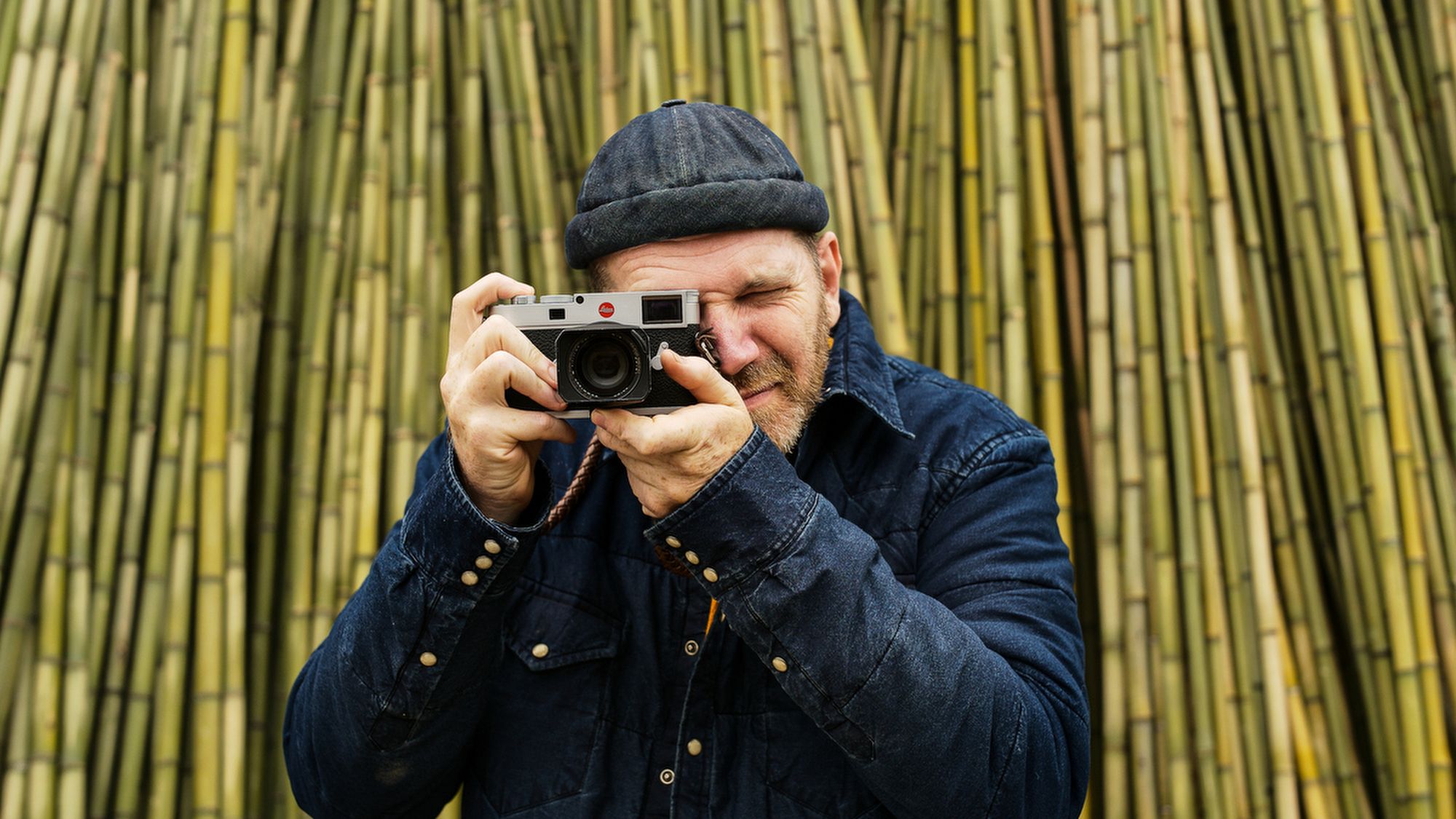
Ghost Photographer: Five Minutes to Get the Shot
Oct 09, 2026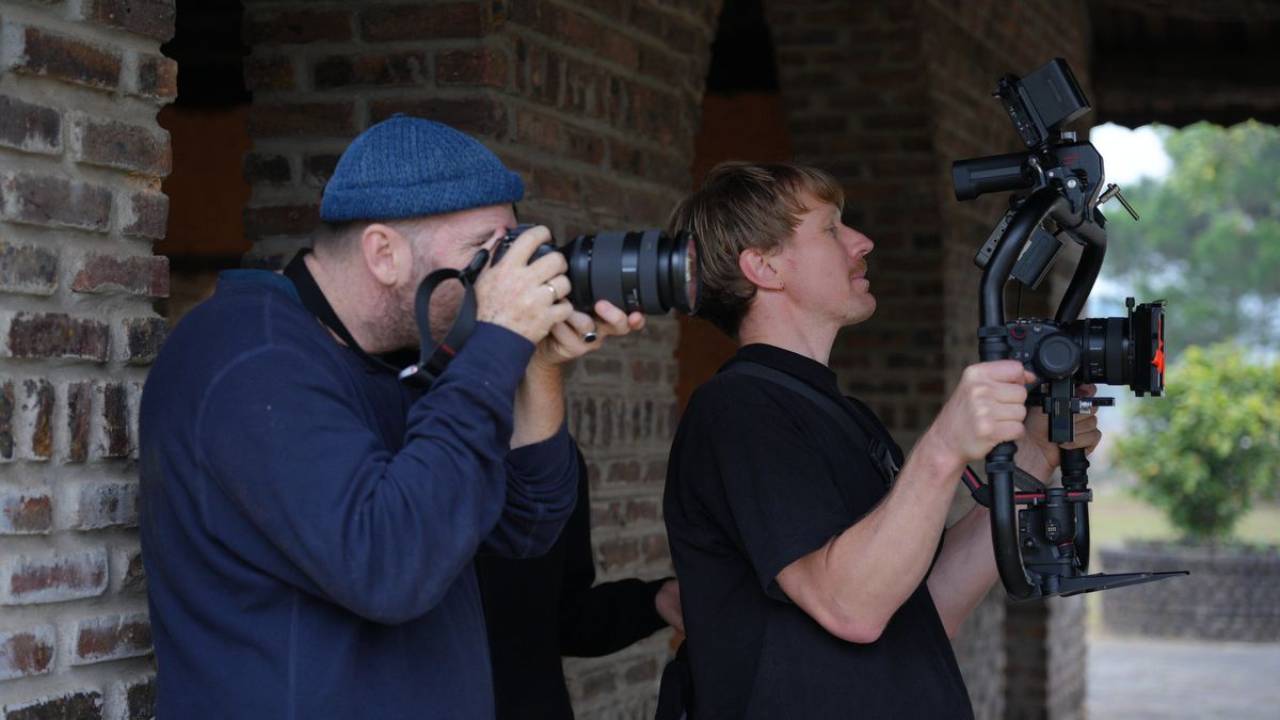
Seven things I’ve learned about working fast, dropping the ego, and making strong stills alongside a video crew.
Ghost photographer sounds like a Bond villain. Probably wears all black and goes by one name. Or maybe just GP. Has a hidden closet full of perfectly arranged cameras and lenses, very Jason Statham. Retired from that life until someone calls about one last job.
The reality is I’m on a shoot, spending an hour scrambling to make photographs around a giant video team, avoiding a boom pole to the head, hoping the producer remembers she promised me five minutes to work the scene on my own. Or hoping the camera crew needs a card swap so I can finally work the room freely.
Ghosting is what I call shooting still photographs alongside a video crew when video has priority. Clients want photographs and video from the same production, and I’m seeing more of this in my commercial work. Whether you’re curious about the professional world or earning your living with a camera, it’s a useful skill to develop. Getting good at it can give people another reason to hire you.
Here are some tips I’ve learned along the way that can help you ghost. And yes, I’m writing this from my secret faux-bookshelf gear room, surrounded by Pelican cases, fake passports, and a go bag.
1. Drop the ego
The video team gets the best position. Find the second best and make it work, or squeeze into their spot and double up. Stop with the ownership of shots. Don’t be too stubborn about taking the same shot as the cinematographer if the client likes the framing. I know, I know, your angle is better and they hired you to be you. Well, not really, they hired you to work around the video team, which is why video has priority. Tough pill to swallow sometimes but pour yourself a glass of water and wash it down. This isn’t to say be lazy and don’t pick your battles when a cool shot presents itself but read the room and the schedule.
2. Prepare before your time starts
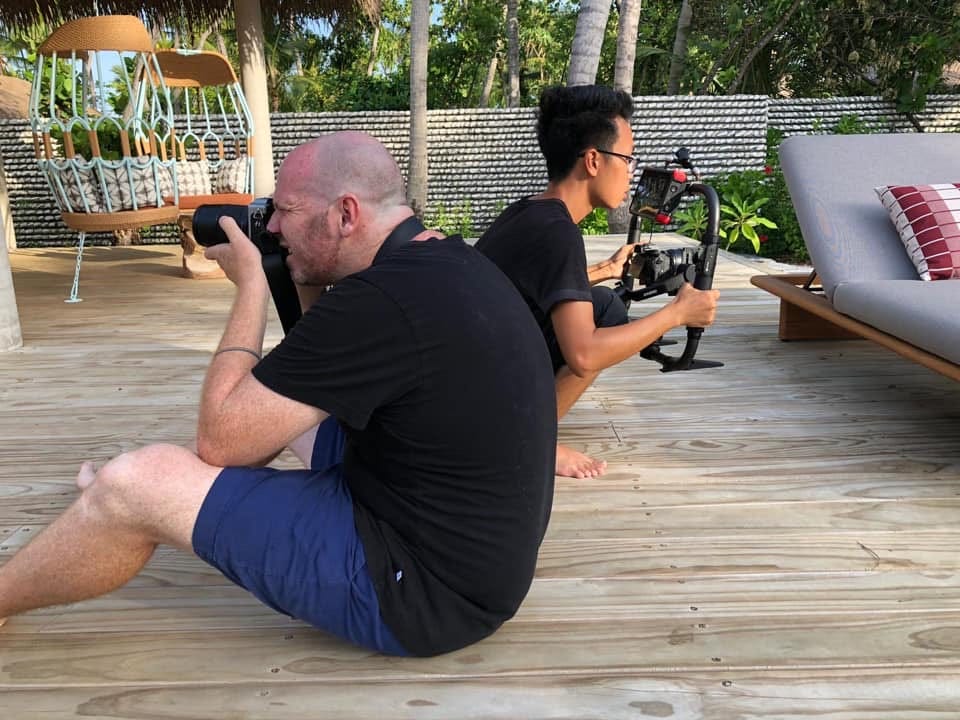
On a hotel shoot through Mott Visuals, my wife and the cinematographer I’d hired gave me five minutes to photograph the video production’s models. Apparently, being the boss doesn’t get you more minutes. While team video is shooting, study the light, find your angle, check the background, and decide what you’ll ask the subject to do. When your turn comes, be ready to shoot.
3. Get the essential photograph first
Know the brief and the shot list through and through. On most of my shoots where photography comes first I have a producer guiding me through the shot list and checking things off. On a ghost shoot, I have to do this all myself as I don’t want to put more on the plate of a producer who’s already doing ten jobs at once. Make the photograph the client needs, check it, then try a tighter or wider frame, or a different gesture. If the client loves a video scene, remember it. You can practically hear the email coming: “Do we have photographs of that?”
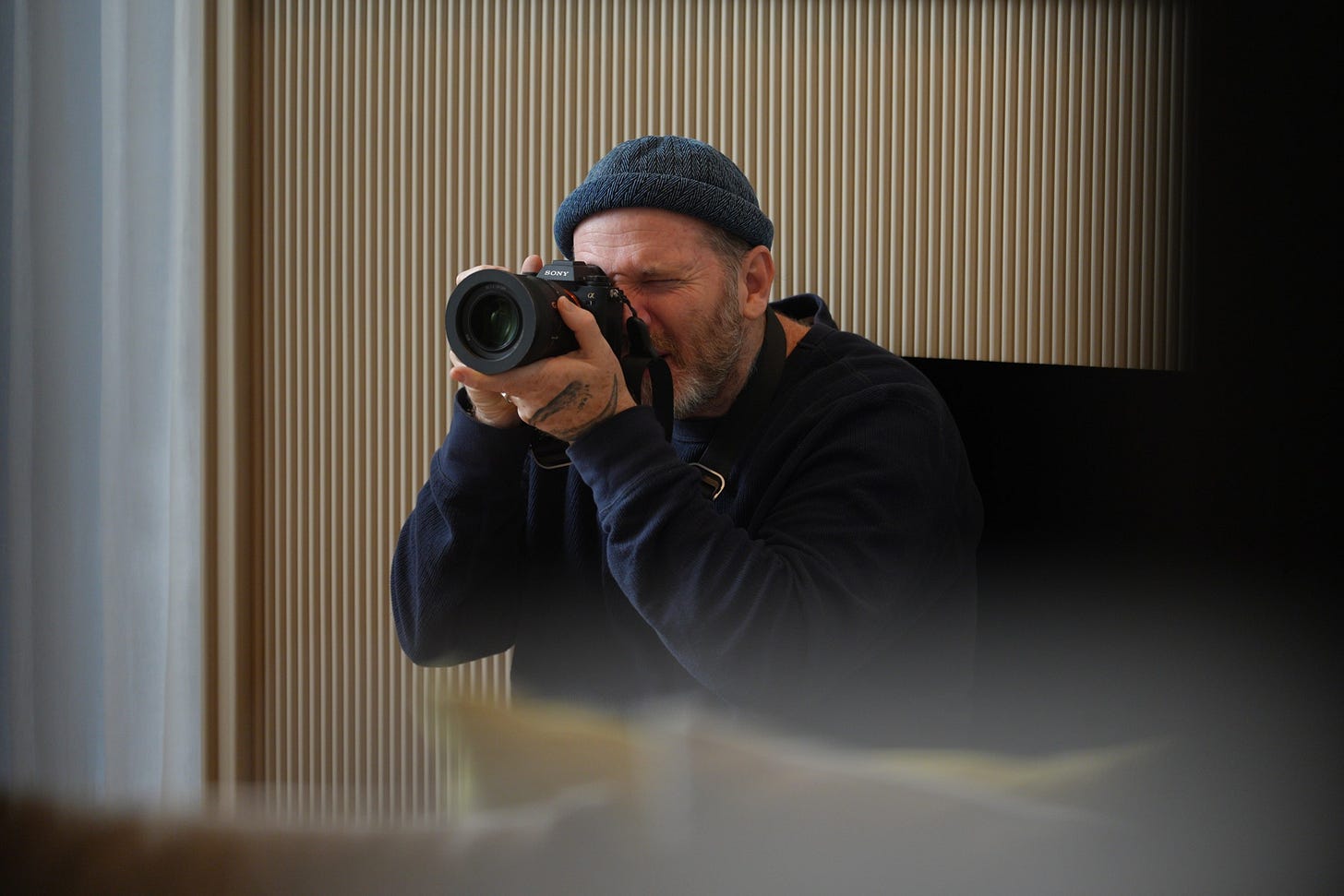
4. Choose the right equipment
If the crew is recording sound, test your silent shutter before the assignment. I’ve changed camera bodies because my previous camera’s electronic shutter produced distortion or warping in some situations when I moved while shooting. I upgraded to a Sony A1 essentially because my A7R V was warping occasionally and I couldn’t risk it. I could justify the cost because I do a load of these shoots. If this is your first shoot like this, see how your current camera handles shooting with an electronic shutter and if you have issues, rent before you buy. Too often, photographers invest for a one-off shoot rather than what’s going to be sustainable. You know who you are. Stop it. It’s bad business.
I’ve switched up my lens setup as well. I love my 35mm, but a wide frame can include half the crew. A 50 or an 85 often helps me find a clean photograph. And yes, this prime shooter has learned to appreciate a good zoom. Five minutes is a persuasive argument for a Sony 28-70mm f2, that lens has bailed me out several times when the fifteen minutes I’d been promised became five.
5. Keep your kit close and watch the crew
I’m often working without an assistant, so I carry spare batteries, cards, a lens cloth, and an extra lens in a small front sling on me at all times. I do this to stay small as I’m already a big dude at six foot one and 220 pounds of twisted steel. I don’t want to be in the way or knock over an expensive RED camera with a bulky backpack. Or perhaps I need to squeeze between the sound dude and the director to get the position I need. I stash the rest of my gear with the video team’s gear in a backpack or roller where it’s safe.
I stay alert. I watch where the video camera is moving and leave the frame before someone asks me to if I’m in the shot. Don’t be the photographer chimping away or on your phone while the director has to yell “in shot”. It’s inevitable you’ll end up in the shot at some point but keep it to a minimum. Stay engaged when you aren’t shooting. That’s when you spot your next opportunity.
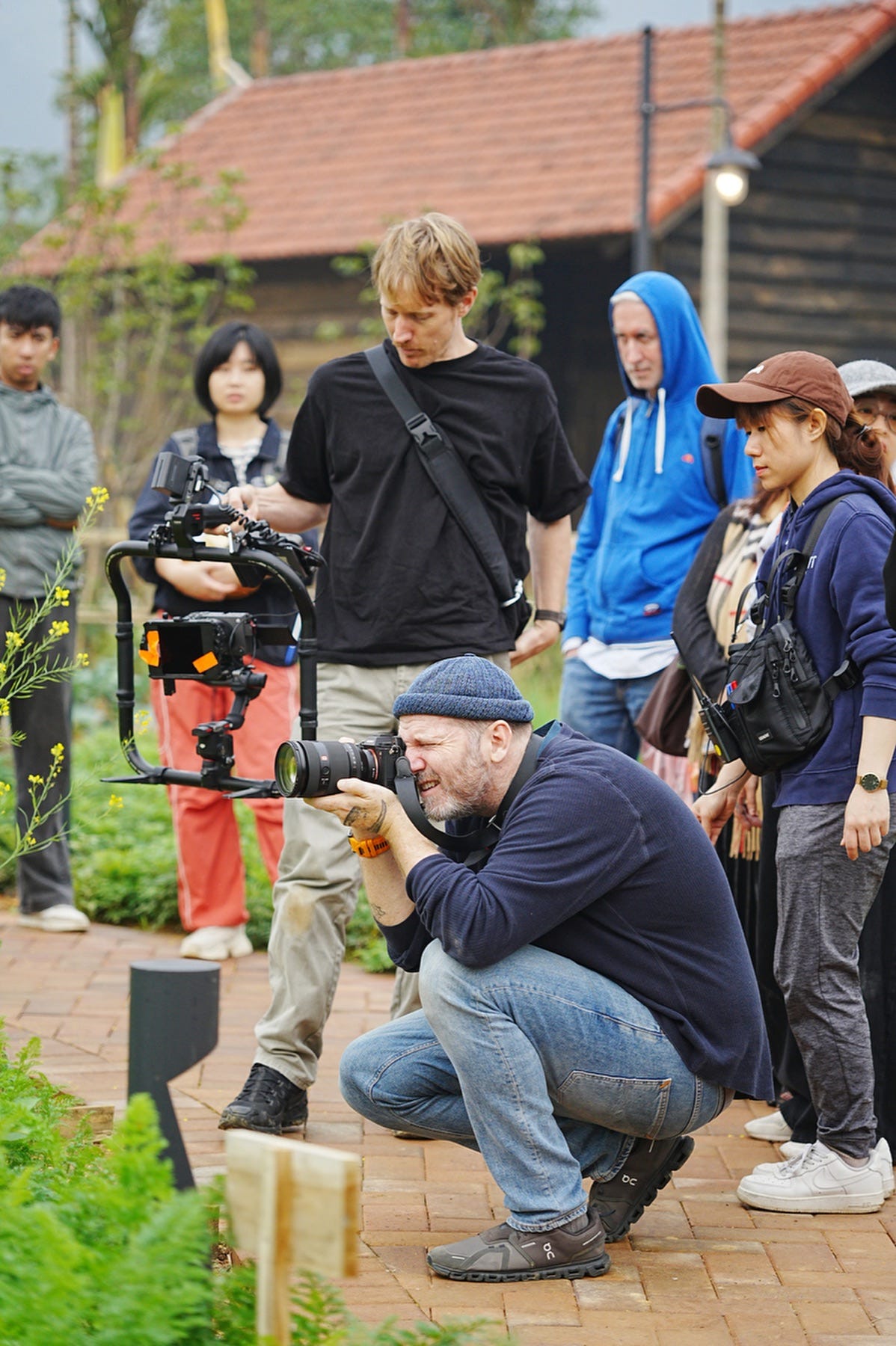
6. Communicate before you run out of time
Establish whether you’ll have dedicated shooting time with the client or the producer depending on the dynamics of the shoot. If an essential photograph is missing, tell the producer while there’s still time to solve it. “Hey, I wasn’t able to get such and such shot on our list, can I get five minutes with the model while you start packing?” This gives them a request they can work with and it puts the responsibility on them if they are okay with moving on from a shot. Don’t use this as an excuse or a blame game. Aim to always find solutions but communication now saves headaches later. Communicate your movements, too. “Behind you, above you, on your shoulders” helps. Nobody wants a cinema rig to the face.
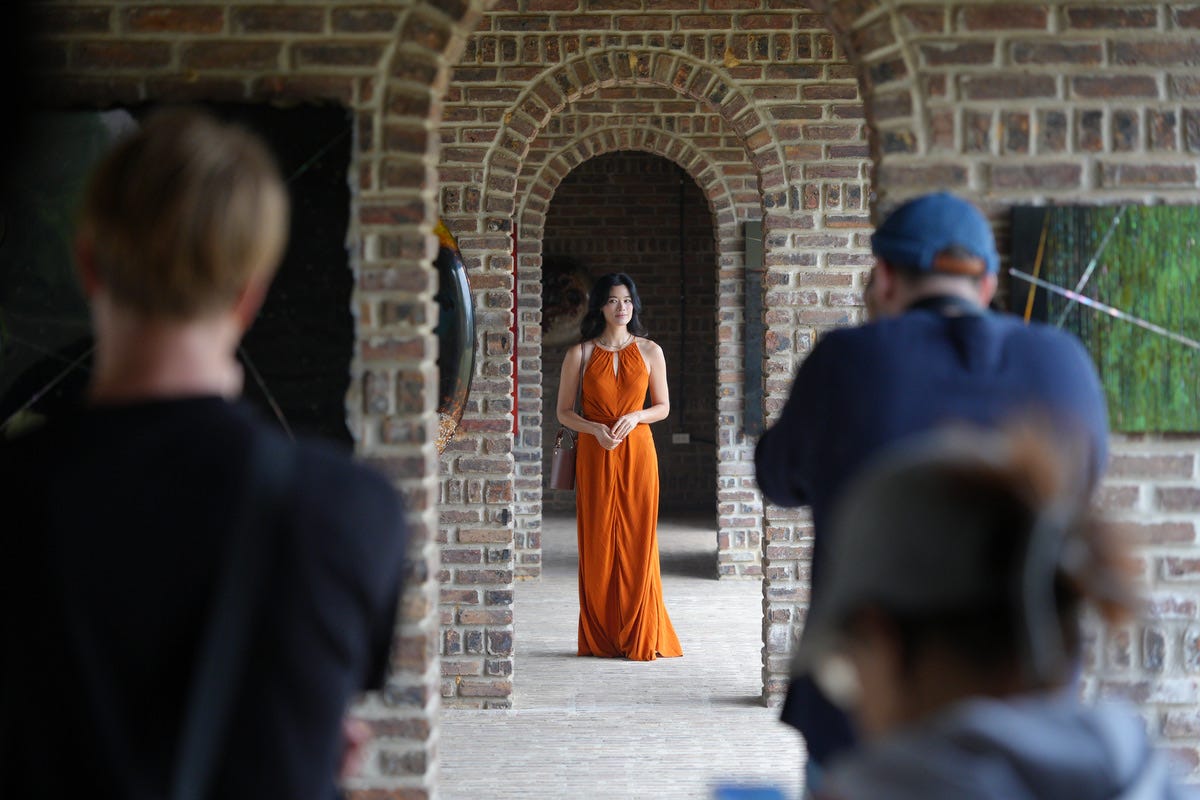
7. Practice under a clock
Try a five-minute portrait challenge with a friend and a clear brief. Plan before the timer starts, make the essential photograph, then build variety. Review what slowed you down and repeat. Pair up with a videographer on a small project and let video lead. Ask afterward whether you interrupted them or entered their frame. Speed and teamwork both take reps.
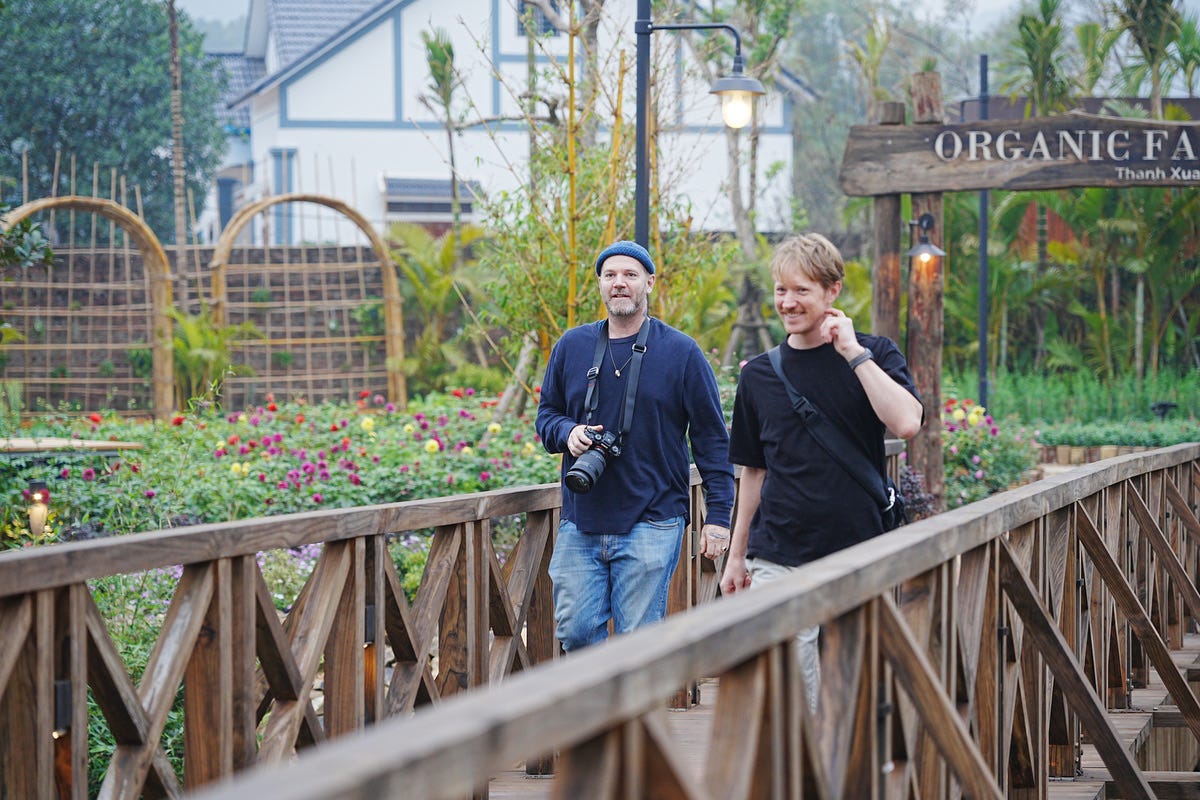
To find this work, approach video production companies, creative production agencies, and directors with a small, relevant portfolio. Build relationships with videographers and pair up on projects. Once you have experience, mention “stills photography alongside video productions” in your bio or services. Look for companies like Mott Visuals, although we aren’t currently taking on new photographers.
Agree on the fee, access, and deliverables before accepting. For me, ghosting typically pays about thirty percent less than my normal photography day rate. Rates vary. Our industry is the Wild West. I understand that a day’s work is a day’s work, but I’m comfortable with less pressure and responsibility translating to a lower fee. I’m also fortunate to have clients who pay well to begin with.
An old professor told me, “They don’t publish your excuses in the caption.” I’ve carried that into my commercial work so even on a ghosting shoot I can deliver images that impress the client and get me repeat business.
If you want help putting this into practice, join the community at askmott.com. You’ll also find one-to-one sessions, mentorship, portfolio reviews, and workshops.
About me
I’m Justin Mott, an editorial and commercial photographer based in Vietnam and co-founder of Mott Visuals. I’ve photographed more than 100 assignments for The New York Times and teach photographers through AskMOTT. Here, I share the lessons I’ve learned from working on assignments, running a production company, and building a career in photography.
Lorem ipsum dolor sit amet, consectetur adipiscing elit. Cras sed sapien quam. Sed dapibus est id enim facilisis, at posuere turpis adipiscing. Quisque sit amet dui dui.
Stay connected with news and updates!
Join our mailing list to receive the latest news and updates from our team.
Don't worry, your information will not be shared.
We hate SPAM. We will never sell your information, for any reason.