Made in Vietnam | My Leica Interview on Teaching Photography Workshops the Honest Way
Aug 13, 2026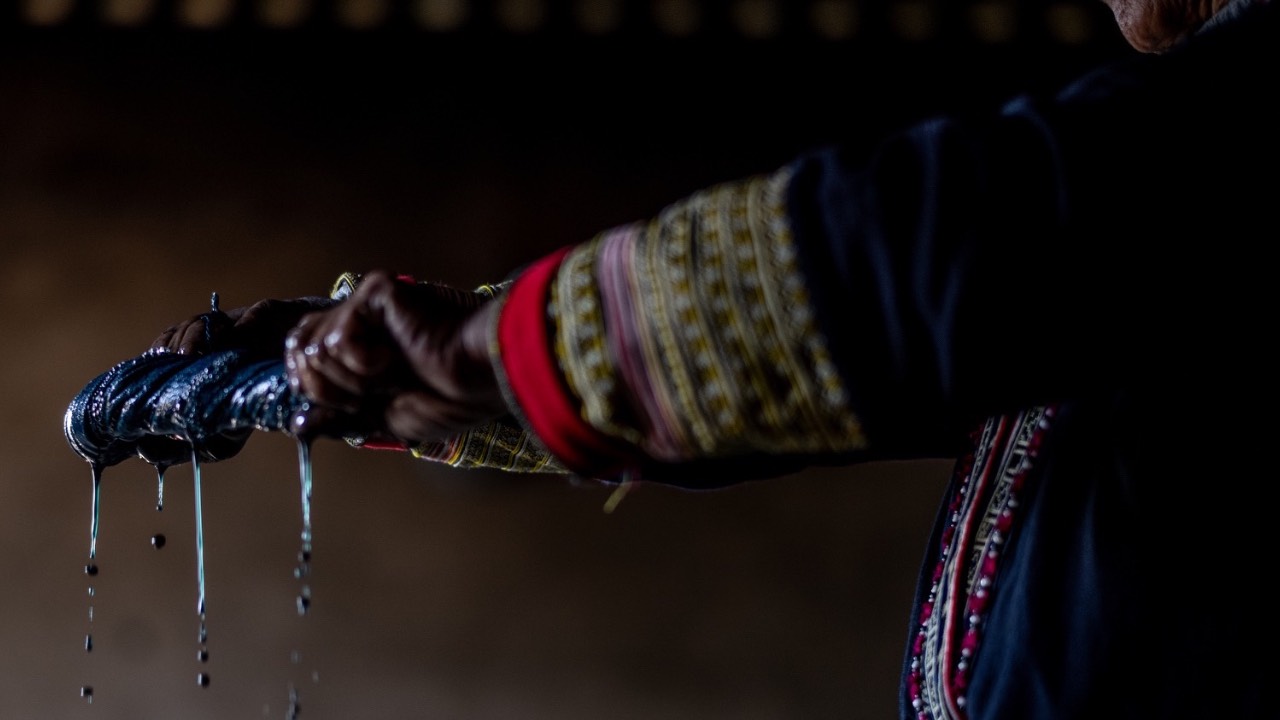
Leica sat me down to talk about how I actually run my workshops, and I didn't give them the polished answer. I told them the truth: the best reportage doesn't come from staging a moment, it comes from curiosity, patience, and being present enough to earn a real one. That's what I try to teach every photographer who shoots with me in Vietnam. The full interview is up now on Leica's LFI.
LFI: What inspired you to document the traditional craft of indigo dyeing in the mountains of Vietnam, and what fascinates you most about this practice?
Justin Mott: Vietnam has a rich cultural heritage and lively traditions. I first came across the culture of the northern mountain tribes on a travel story I shot for The New York Times. I was fascinated by the culture: I saw silversmiths making jewellery and seamstresses sewing by the fire, and the whole indigo dyeing process. As someone who loves the colour blue, I was drawn to it with my camera.
What do you pay particular attention to when photographing indigo dyeing and similar traditional crafts? Which moments or details are especially important to you?
My background is in assignment photography, so I’m always looking to document the process of things. Being based in a country like Vietnam where many of the world’s products are made, I’m always documenting processes. I don’t go in with any preconceived notions of what I want to capture; what I’m looking for is authenticity. I don’t want my subjects or anyone setting anything up for me. I plan best with a local fixer to arrange things, so I just come and document as they go about their processes. There’s no dressing a certain way or staging any action; just do what you do and I’ll work around it.
What does your photographic practice look like?
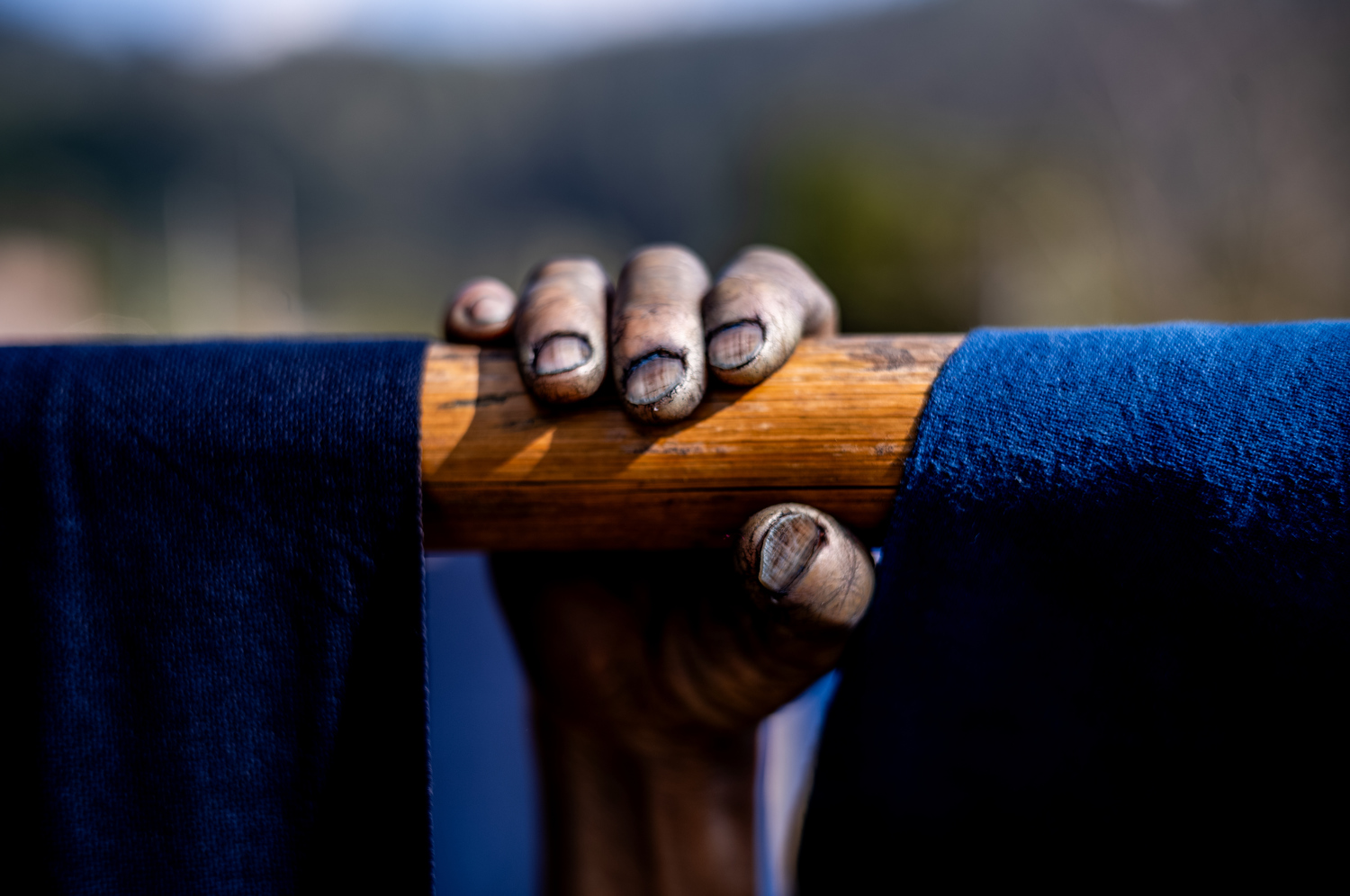
In each situation I look for total, close-up shots and details – as well as the moments in between. Of course, I want to show how the cloth dries, how the dyeing happens and what tools are used. Yet, a picture of a child skipping with a rope close by is equally important to me. Whilst taking pictures, I’m constantly considering which images I already have and which ones are still missing, in order to tell a story for each publication. I need a strong lead image that sums it all up, followed by pictures that bring the story to life.
The images shown here were created during one of your workshops...
I teach what I know and I know stories. I’ve shot over 100 assignments for The New York Times and I like my workshop to be a mini environment of what it’s like to be an assignment photographer. My wife is Vietnamese and part of the community we work with, so we bounce ideas off her, and she finds subjects willing to let us document them naturally and respectfully.
How does such a workshop work in practice?
For my workshops, I’ve capped my participants to 5-6 and I only do a couple a year. This creates a more intimate environment. I act as their mentor and editor of sorts, and they get daily mini assignments to learn storytelling skills. At first I photograph side by side with the participants. Later on they work independently to apply what they’ve learnt. My aim is not that the workshop become the highlight of their photographic development, but the beginning. I stress to them that I don’t want their best pictures taken during my workshops, but rather afterwards.
What specifically do you want the participants in your workshops to learn?
Above all, photography means solving problems so as to get a picture in every situation. This is the precise reality I want to convey. There will be bad lighting, hesitant people or places that are difficult to photograph. The decisive point is to make something out of it anyway. They should also learn to work with clear assignments – something that many amateur photographers are lacking. When I was studying photojournalism, we would get concrete assignments and we then had to present our results to the whole class. That forced us to think creatively and to find solutions for tough conditions. I still remember one thing my Professor used to say: “They don’t print your excuses in the captions.” I’m not as harsh to my workshop students as he was, but most come to me because they want to be pushed, so I do so.
What advice would you give photographers who want to take part in a documentary photo workshop?
Know the difference between a workshop and a tour right away; many tours call themselves workshops but they are not. A photo tour typically shows you pictures and a workshop teaches you how to find them, that’s the best way I can sum it up. Put in the research about your instructor: a bigger name or following doesn’t always equate to being a good teacher. I also know big names with impressive resumes who teach as money grabs and their heart isn’t in it. So, check if the teacher’s work approach and personality suit you. Don’t be afraid to ask questions and reach out to past participants to get their take.
If you really want to learn, sign up for a workshop that will challenge you. People are often scared of not being good enough; but a good workshop and teacher can adapt to a wide range of students. I teach storytelling skills that can be learned by all levels and even applied to most genres of photography. Learning to document a story will help you with your street photography, portrait work, travel work, reportage, and more.

LFI: What inspired you to document the traditional craft of indigo dyeing in the mountains of Vietnam, and what fascinates you most about this practice?
Justin Mott: Vietnam has a rich cultural heritage and lively traditions. I first came across the culture of the northern mountain tribes on a travel story I shot for The New York Times. I was fascinated by the culture: I saw silversmiths making jewellery and seamstresses sewing by the fire, and the whole indigo dyeing process. As someone who loves the colour blue, I was drawn to it with my camera.
What do you pay particular attention to when photographing indigo dyeing and similar traditional crafts? Which moments or details are especially important to you?
My background is in assignment photography, so I’m always looking to document the process of things. Being based in a country like Vietnam where many of the world’s products are made, I’m always documenting processes. I don’t go in with any preconceived notions of what I want to capture; what I’m looking for is authenticity. I don’t want my subjects or anyone setting anything up for me. I plan best with a local fixer to arrange things, so I just come and document as they go about their processes. There’s no dressing a certain way or staging any action; just do what you do and I’ll work around it.
In each situation I look for total, close-up shots and details – as well as the moments in between. Of course, I want to show how the cloth dries, how the dyeing happens and what tools are used. Yet, a picture of a child skipping with a rope close by is equally important to me. Whilst taking pictures, I’m constantly considering which images I already have and which ones are still missing, in order to tell a story for each publication. I need a strong lead image that sums it all up, followed by pictures that bring the story to life.
The images shown here were created during one of your workshops...
I teach what I know and I know stories. I’ve shot over 100 assignments for The New York Times and I like my workshop to be a mini environment of what it’s like to be an assignment photographer. My wife is Vietnamese and part of the community we work with, so we bounce ideas off her, and she finds subjects willing to let us document them naturally and respectfully.
How does such a workshop work in practice?
For my workshops, I’ve capped my participants to 5-6 and I only do a couple a year. This creates a more intimate environment. I act as their mentor and editor of sorts, and they get daily mini assignments to learn storytelling skills. At first I photograph side by side with the participants. Later on they work independently to apply what they’ve learnt. My aim is not that the workshop become the highlight of their photographic development, but the beginning. I stress to them that I don’t want their best pictures taken during my workshops, but rather afterwards.
What specifically do you want the participants in your workshops to learn?
Above all, photography means solving problems so as to get a picture in every situation. This is the precise reality I want to convey. There will be bad lighting, hesitant people or places that are difficult to photograph. The decisive point is to make something out of it anyway. They should also learn to work with clear assignments – something that many amateur photographers are lacking. When I was studying photojournalism, we would get concrete assignments and we then had to present our results to the whole class. That forced us to think creatively and to find solutions for tough conditions. I still remember one thing my Professor used to say: “They don’t print your excuses in the captions.” I’m not as harsh to my workshop students as he was, but most come to me because they want to be pushed, so I do so.
What advice would you give photographers who want to take part in a documentary photo workshop?
Know the difference between a workshop and a tour right away; many tours call themselves workshops but they are not. A photo tour typically shows you pictures and a workshop teaches you how to find them, that’s the best way I can sum it up. Put in the research about your instructor: a bigger name or following doesn’t always equate to being a good teacher. I also know big names with impressive resumes who teach as money grabs and their heart isn’t in it. So, check if the teacher’s work approach and personality suit you. Don’t be afraid to ask questions and reach out to past participants to get their take.
If you really want to learn, sign up for a workshop that will challenge you. People are often scared of not being good enough; but a good workshop and teacher can adapt to a wide range of students. I teach storytelling skills that can be learned by all levels and even applied to most genres of photography. Learning to document a story will help you with your street photography, portrait work, travel work, reportage, and more.
Interested in learning these skills in the field? Explore my photography workshops in Vietnam.
Read the full article here.
Lorem ipsum dolor sit amet, consectetur adipiscing elit. Cras sed sapien quam. Sed dapibus est id enim facilisis, at posuere turpis adipiscing. Quisque sit amet dui dui.
Stay connected with news and updates!
Join our mailing list to receive the latest news and updates from our team.
Don't worry, your information will not be shared.
We hate SPAM. We will never sell your information, for any reason.