Documenting the Last Two Northern White Rhinos on Earth
Jun 16, 2026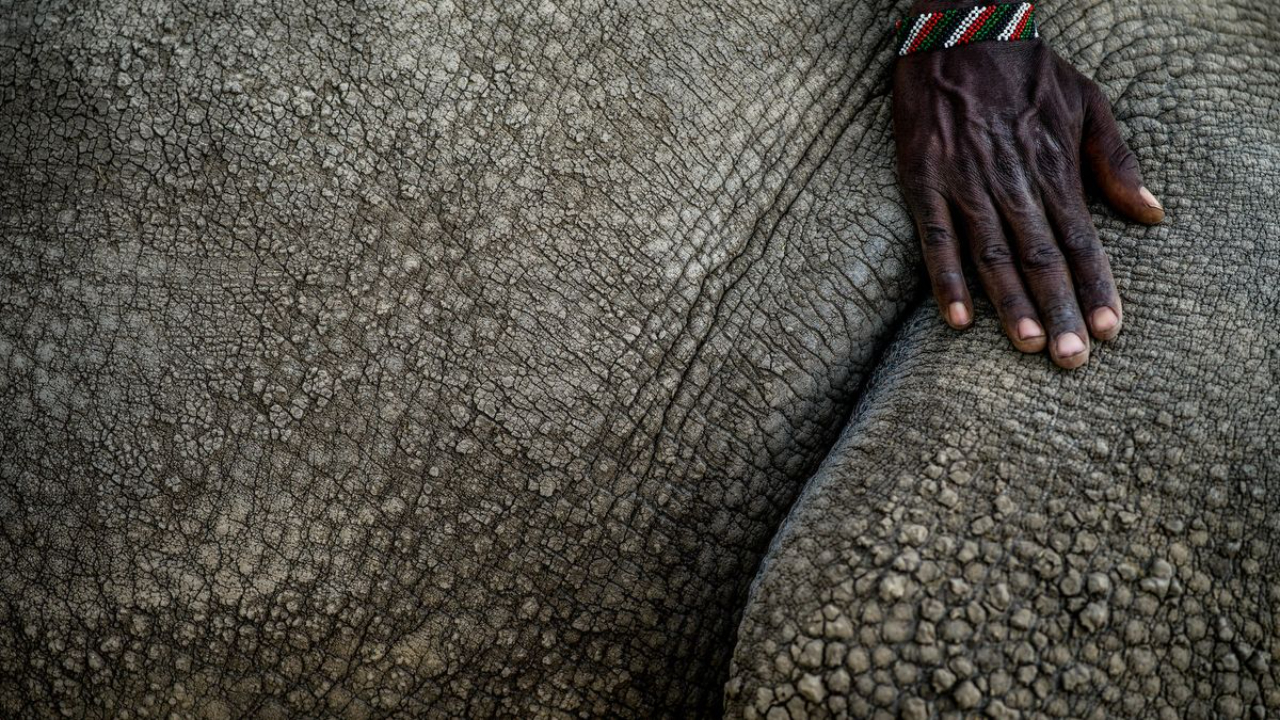
Time, trust, and the act of documenting the last two northern white rhinos.
Fatu and Najin are the last two northern white rhinos left on Earth. Sudan, the last male, died in 2018. What remains is a mother and daughter living under armed protection in central Kenya, watched over day and night by people who have quietly devoted their lives to them.
That story became one of the most important chapters of my career.
A career built on other people's stories
I have photographed on assignment for nearly two decades, completing over 100 assignments for the New York Times. I built my career photographing people, places, and stories that pulled at my curiosity. Long-form documentary work taught me patience, restraint, and how to sit with a story long enough for it to reveal itself.
No one tells you in university that editorial photography is rarely your story, or at least not a story told the way you want to tell it. Time is short. Access is limited. Commercial photography pays sustainable money, editorial often does not, and slowly you find yourself leaning more toward the former.
By my 40s, something felt off. I loved my job. I loved the adrenaline of problem solving on deadline, the travel, the controlled chaos. But creatively, something was missing. My photography felt unanchored. I began asking myself what I would be known for, and where I could truly show who I was as a long-form documentary storyteller.
That period of questioning led me to wildlife photojournalism, and more specifically to stories about people who dedicate their lives to protecting animals. When I read about the last male northern white rhino dying, and learned that only two females remained, I felt a pull I could not ignore. This had to be my story. It became the first chapter of what I later called the Kindred Guardians project — a self-funded body of work focused on people helping animals around the world.
Getting access — without the Times behind me
I naïvely thought one email to the conservancy holding the rhinos would be enough. It wasn't. Many photographers and filmmakers wanted access, and this time I did not have the New York Times behind me. Doors did not swing open.
I also chose not to pitch the story to any publication beforehand. Not out of ownership or ego, but because I needed this project to be mine. No editor dictating frame counts. No layouts to shoot for. No single lead image followed by a handful of supporting frames. I wanted to discover the story, not illustrate it.
That meant doing things the way I was trained. Ethically. No paying for access. No manufactured narrative. Just showing up, spending time, and documenting daily life.
Once access was granted, I asked for weeks, not days. That confused them. I explained that I wanted to earn the story, not simply get it. I needed time to earn proximity to the rhinos, to earn intimacy with their caretakers, and to understand the layers of protection around them.
Standing in front of Fatu and Najin
After a long flight from Vietnam and a four-hour drive from Nairobi, I arrived at Ol Pejeta exhausted. That feeling vanished the moment I reached the gate.
Ten years earlier, I had gone undercover photographing the illegal wildlife trade in SE Asia on an assignment for TIME magazine. I held a severed rhino horn in my hands. I remember the anger, the weight of knowing what humans are capable of.
Now I was here, standing in front of Fatu and Najin.
A few days in, after trust had been earned, I was able to sit with Najin and place my hand on her horn. The weight of that moment overwhelmed me. I broke down and cried.
Learning their rhythms
I documented their lives from sunrise to sunset. Grazing. Drinking. Sleeping. Every day was the same for them, yet every day my photographs grew stronger. I learned their rhythms, paid closer attention to the light, waited longer.
They live alongside a third rhino, Taiwo, a southern white rhino raised in the wild. She complicated everything from a storytelling standpoint. Telling the story of the last two northern white rhinos required discipline — her presence rendered nearly three quarters of my images unusable.
Later, Zacharia, the head caretaker, told me he was surprised I cared about that distinction. He said many photographers and TV crews include Taiwo while claiming to show the last northern white rhinos. Of course it matters. I am a journalist.
Zacharia — the man who chose purpose over proximity to his family
Zacharia is one of the most remarkable people I have met. He has a large family several hours away, yet he spends 21 days on and six days off with the rhinos — more time with them than with his own children. This is not a job to him. It is his purpose.
I also spent time with Peter, his colleague, whose presence is as striking as his kindness. I joined rangers on patrol, though my focus always returned to the caretakers and the bond they share with the animals.
What this project gave back to me
I have returned multiple times since that first trip. I filmed a short documentary, now released on YouTube, and documented the BioRescue team's attempts to pull the northern white rhino back from extinction.
That first trip changed me. This story gave my photography purpose again. I was no longer just a storyteller for hire. I was telling stories that came from my own heart. Nothing in photography feels more honest to me than that.
This work has since been published by the Washington Post, Greenpeace, The Guardian, Slate, and even as part of a global Leica campaign.
But the most meaningful part of this journey was meeting Zacharia and learning what kindness, patience, and purpose truly look like.
If you're interested in the full long-form photo story, it's meant to be sat with, not skimmed — absorbed, not consumed. You can find it on my portfolio at askmott.com.
If you want to learn how to approach long-form documentary projects like this one, I offer 1-on-1 coaching and workshops focused on building your own meaningful bodies of work.
Lorem ipsum dolor sit amet, consectetur adipiscing elit. Cras sed sapien quam. Sed dapibus est id enim facilisis, at posuere turpis adipiscing. Quisque sit amet dui dui.
Stay connected with news and updates!
Join our mailing list to receive the latest news and updates from our team.
Don't worry, your information will not be shared.
We hate SPAM. We will never sell your information, for any reason.