The Assignment Didn't Go as Planned
Jun 16, 2026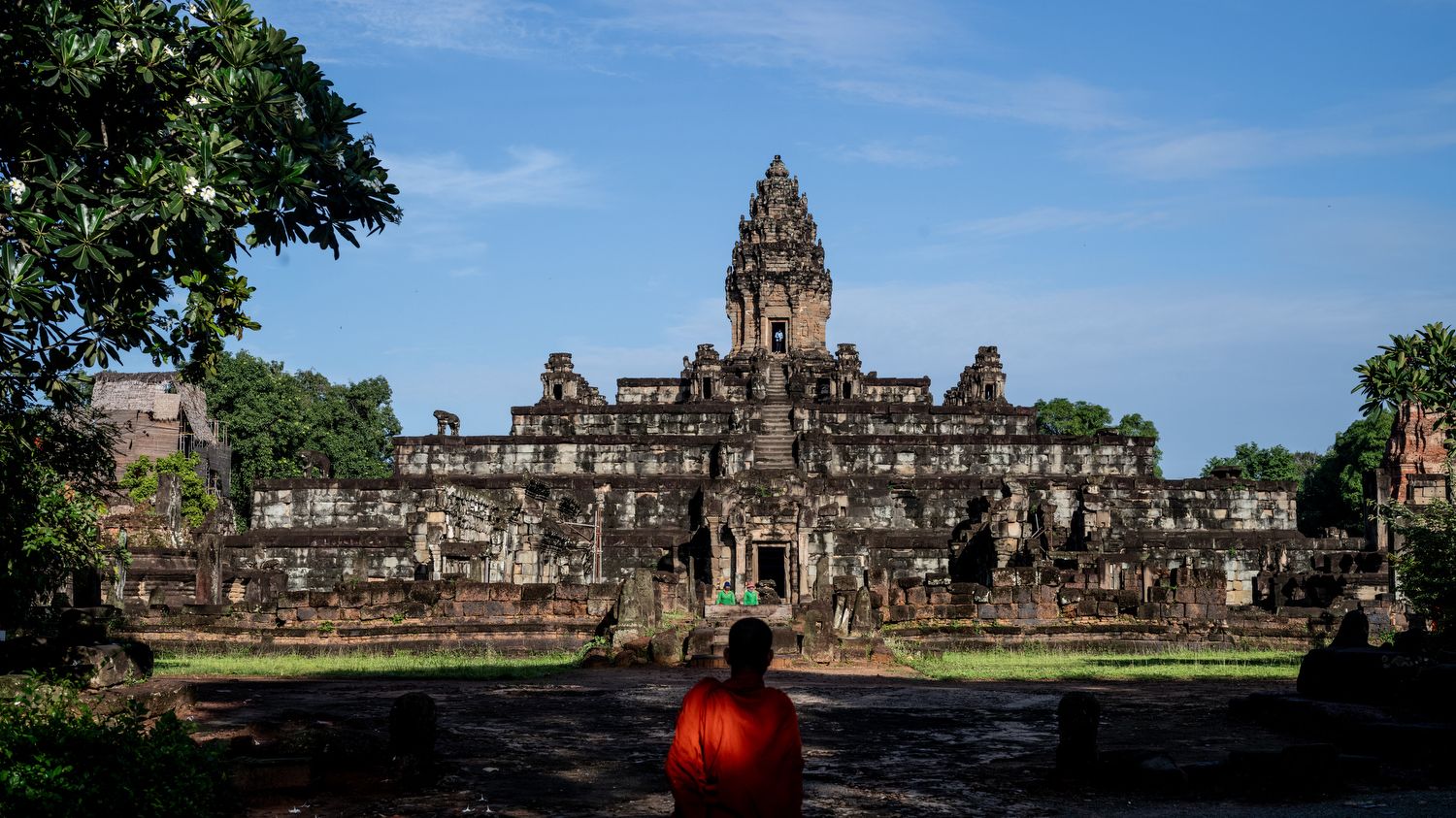
On photographing a Smithsonian Magazine story in Cambodia when the camera failed, the narrative shifted, and there was no room for mistakes.
At the end of last year I was commissioned by Smithsonian Magazine to photograph a story in Cambodia. On paper it was a great assignment — strong stories, solid budgets, and access to fascinating historical narratives. The kind of work you don't overthink. You just say yes and figure it out on the ground.
The Assignment
The story lived in two timelines. The past centered on André Malraux, a young French writer who in 1923 attempted to cut ancient Khmer carvings out of a temple at Banteay Srei and smuggle them out of Cambodia. The present side was supposed to follow efforts to recover stolen artifacts and return them to Cambodia — which is where I thought the real visual weight would be.
That assumption didn't hold.
I was scheduled to meet the writer flying in from Europe, but I'd had surgery for a deviated septum and couldn't fly for a few weeks. My editor adjusted the schedule. We had two days in Siem Reap and one day in Phnom Penh. That's not a lot of time for a story that spans a hundred years, and once those days are locked in, there's no extending them. Whatever you don't get in that window simply doesn't exist.
When the Gear Fails
For gear I brought my standard editorial setup — a Leica M11 with 35, 50, and 75mm lenses, along with a backup M10-D. But the M11 started acting up almost immediately. Misfires, shutter delay, inconsistent performance. It's the kind of thing that frustrates you more on assignment because there's no room for excuses.
I switched to the M10-D and kept working. This is exactly why backup gear exists. Not as a safety net you hope you won't need, but because you eventually will.
Shooting the Unphotographable
Most of our time in Siem Reap was spent moving through temples, trying to visualize something that happened a hundred years ago. That's always the challenge with historical stories. You're not documenting an event — you're interpreting what's left behind. Malraux and his team cut carvings directly from stone walls, packed them up, and tried to move them quietly through Cambodia before being stopped. None of that exists anymore. You're left with space, light, texture, and the responsibility to make it feel like something happened there.
When the story isn't clear, you don't take fewer photos. You expand your coverage. More options. More variations. Something will change — it always does.
When the Story Shifts
In Phnom Penh we covered museums, institutional context, and locations tied to Malraux's arrest. Museums are always difficult: restrictive, repetitive, and limited by permissions. At one point I was told I couldn't shoot at all. Without my fixer stepping in, that part of the story would have disappeared entirely.
The images I personally liked most came from Siem Reap — the temples, the atmosphere, moments that felt alive. But the story shifted. The final piece leaned heavily into the historical narrative and colonial-era looting. The modern thread became secondary. That changed what images carried weight in the edit.
The Lesson
In the end, the camera gave me problems, the story direction wasn't clear, and the narrative changed after everything was shot. And it still worked. Not because things went smoothly, but because I had enough coverage to support whatever direction the story took.
That's the job. You're not shooting for the version of the story you're told. You're shooting for what it could become. Build in flexibility. Protect yourself from uncertainty. Make sure that when the edit happens, even if you're not in the room, the work holds together.
If you do that well, everything else tends to take care of itself.
Interested in understanding how professional assignments really work? Explore 1-on-1 coaching or the upcoming workshops.
Lorem ipsum dolor sit amet, consectetur adipiscing elit. Cras sed sapien quam. Sed dapibus est id enim facilisis, at posuere turpis adipiscing. Quisque sit amet dui dui.
Stay connected with news and updates!
Join our mailing list to receive the latest news and updates from our team.
Don't worry, your information will not be shared.
We hate SPAM. We will never sell your information, for any reason.