The Photos You Remember
Jun 16, 2026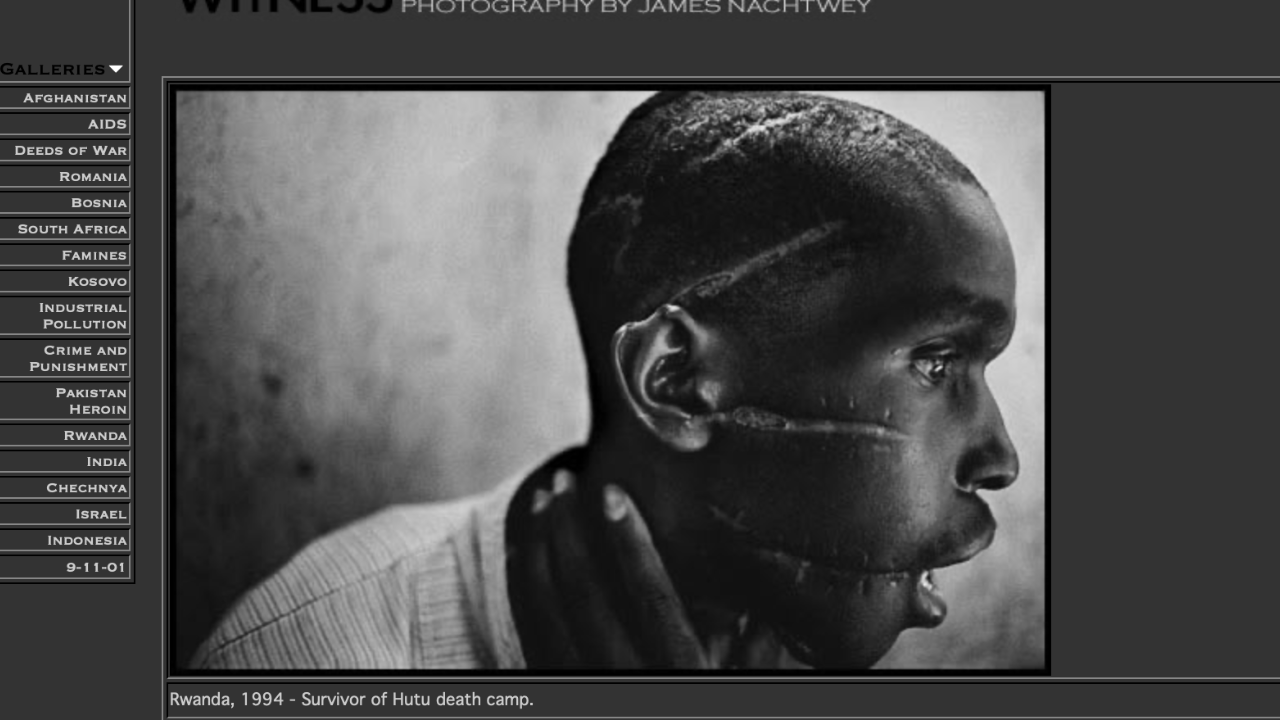
Why most photography today is already forgotten, and what two very different masters can teach you about work that lasts.
There is a question worth sitting with before you read another photography tutorial, buy another piece of gear, or watch another YouTube breakdown of someone's camera settings.
When was the last time a photograph stopped you completely? Not one you liked. Not one you saved or shared. One you actually remember. One that is still seared somewhere in the back of your head, months or years after you first saw it.
Most people have to think for a moment. Then something shifts. And what surfaces is almost never the most technically impressive image they have ever seen. It is something that made them feel a specific emotion they were not expecting.
That gap between what we remember and what we are taught to chase is what this piece is about.
Two Photographers. Two Completely Different Approaches. The Same Result.
I have been comparing two photographers in my workshops and online 1:1 classes for years. They prove a point better than any lecture I could give.
The first is James Nachtwey. His work is at jamesnachtwey.com. His work is formally composed, graphically precise, often shot in high-contrast black and white that feels more like cinema than social media. He has won the Robert Capa Gold Medal five times. He has won World Press Photo of the Year multiple times. He has covered Rwanda, Chechnya, Bosnia, Somalia, South Africa, 9/11, and the opioid crisis in America. He has been injured in a grenade attack while working in Baghdad. He has spent over four decades going to the worst places on earth and coming back with images that force the world to look.
Here is what Nachtwey said about his own approach:
"I use what I know about the formal elements of photography at the service of the people I'm photographing, not the other way around. I'm not trying to make statements about photography. I'm trying to use photography to make statements about what's happening in the world."
Form serves people. Not the other way around.
That single statement dismantles about ninety percent of the photography content being made right now.
The second photographer is Brenda Ann Kenneally. Her work is at therawfile.org. She resists being called a photographer. Her preferred term is digital folk artist. She does not just show up and shoot — she collects family photo albums, school records, letters from prison, scrapbooks, screenshots. She is building a complete archive of human lives, not a portfolio.
Her project Upstate Girls started in 2003 when a teenager named Kayla asked if Kenneally wanted to photograph the birth of her child. She said yes. She kept going for fourteen years. The result is a 412-page book documenting births, addiction, incarceration, funerals, teenage pregnancies, and everything in between for a group of working-class families on a single block in Troy, New York.
She has described her own mission simply: "If my own work doesn't devastate me into action, then I have no business doing it."
What They Actually Have in Common
Two photographers. Different subjects, different aesthetics, different careers, different everything. One has spent four decades in the world's conflict zones. The other spent decades on a single block in upstate New York.
What they share is not a style. It is a commitment. A decision, made early and never reversed, that the story mattered more than the shot. That the person in front of the camera was worth full attention, not just a well-timed frame. That presence was the job, and the photographs were just the evidence of having been present.
Kenneally said something that has stayed with me: "I take pictures to remember what I learned while I was busy taking pictures."
The Soulless Photography Problem
A significant portion of what gets celebrated in photography right now would not pass the memory test. The reflection in the puddle. The stranger walking through a shaft of light. The fake candid in a foreign market. The juxtaposition that someone told you was profound. The faded film filter on a perfectly composed nothing.
I am talking about an ecosystem that has taught an entire generation to optimize for aesthetics over honesty, for performance over presence. The algorithm rewards the shaft of light. And slowly, photographers start building their practice around what performs rather than what means something.
The result is technically impressive, visually consistent, and completely forgettable within 48 hours of seeing it.
Nachtwey's Rwanda photograph is thirty years old. You will remember it for the rest of your life after seeing it once.
The Lesson Is Not the Subject
The lesson is not about photographing war or poverty or crisis. The lesson is about approach. About presence. About deciding that the person or moment in front of you is worth your full attention before you think about the frame.
You can apply this to a wedding. A portrait session. A street series. A project about your own family. The emotional weight is available in any subject if you are actually there for it.
Nachtwey again: documentary photography is based on perception, not technology. The camera is the last thing that matters.
A Final Thought
The images I am most proud of, the ones I can describe from memory, are almost never the most technically impressive ones I have made. They are the ones where I was fully there. Where I stopped thinking about the frame and just paid attention to the human being or animal in front of me.
That is the practice. That is the whole practice.
Go spend time with Nachtwey's work at jamesnachtwey.com. Then go to therawfile.org for Kenneally. Not the greatest hits. The whole bodies of work. Then go make one photograph where presence was the only thing you were thinking about.
Want to work on presence and intention in your own photography? That's exactly what we do in 1-on-1 coaching and the AskMott workshops.
Lorem ipsum dolor sit amet, consectetur adipiscing elit. Cras sed sapien quam. Sed dapibus est id enim facilisis, at posuere turpis adipiscing. Quisque sit amet dui dui.
Stay connected with news and updates!
Join our mailing list to receive the latest news and updates from our team.
Don't worry, your information will not be shared.
We hate SPAM. We will never sell your information, for any reason.